

June Week 2 Market Brief
June 2026 — Week 2
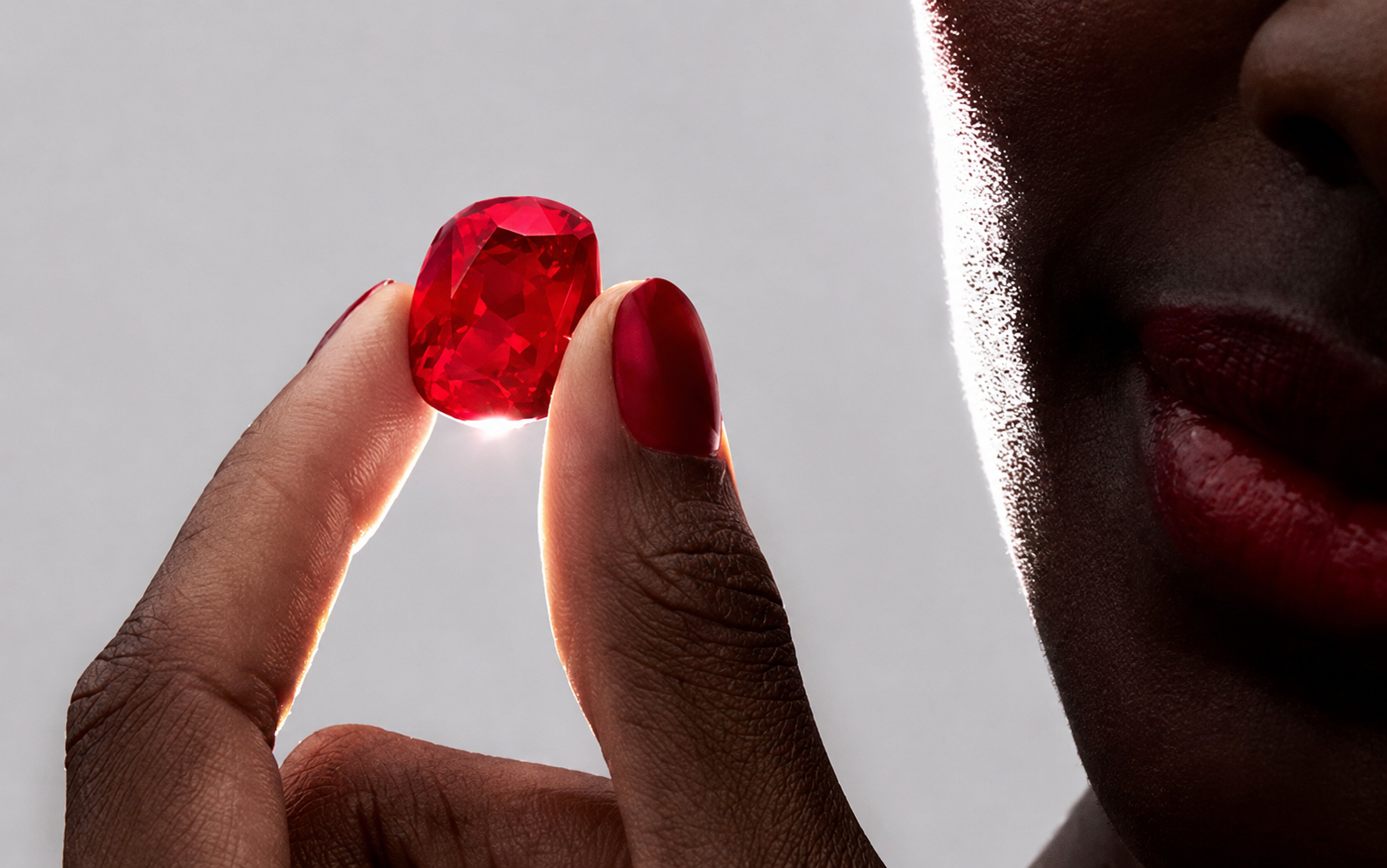
Ruby Auctioned in 2023
Image courtesy of International Gemological Institute
Market Snapshot
Gemfields' higher-quality Kagem emerald auction, held 4–21 May 2026, generated $26.8M in revenue, with a 99.1% sell-through by weight, 97% of lots sold, and an average price of $146.08/ct. Compared with the September 2025 higher-quality auction at $32.0M, 100% sold, and $160.78/ct, surface-level analysis shows a -9.1% change in average price. Demand, however, has not weakened. A genuine deterioration would show lower sell-through, unsold inventory, and meaningful lot withdrawals; 97% of lots sold and 99.1% by weight remain exceptional results. The softer average reflects more cautious buyers, Indian rupee depreciation of approximately 10% against the US dollar over the intervening period, and the normalization effect of the August–September 2025 auction having included the exceptional 11,685-carat Imboo emerald, which distorted the prior average upward.
Despite the short-term softening, the structural outlook for natural colored gemstones remains very strong, with several macro forces converging simultaneously. The lab-grown diamond disruption is one of the most decisive structural shifts in fine jewelry history. Lab-grown stones now account for 42% of US diamond jewelry sales, natural diamonds sit at 25-year price lows, and De Beers itself is in crisis, pushing consumer attention and investment-grade demand toward stones that cannot be synthesized at a meaningful scale, colored gemstones first among them. Bain confirms jewelry was the most resilient luxury category in China through 2025, declining just 0–5% while watches fell 14–17%, and the Chinese luxury market has now begun recovering, with LVMH posting two consecutive quarters of organic growth. Gemfields is actively engineering structured scarcity, scaling back the June 2026 ruby auction and disciplining supply in real time, while premium discovery remains geologically rare and global traceability infrastructure hardens through GIA origin-service expansion and G7 provenance sanctions.
On the ruby side, Gemfields' 21 May 2026 announcement confirmed it would hold a "smaller-than-usual June auction of selected grades to suit prevailing market demand," citing lower-than-expected Montepuez production, weak liquidity in the ruby trade, and subdued Chinese demand. It stated instead that it would maintain flexibility on the size, frequency, and timing of ruby auctions for the remainder of 2026, signalling active supply discipline. That decision reflects a sharper polarization in Chinese ruby demand. At the rough level, Montepuez mixed-quality $/ct has softened from $316.95 in June 2024 to $279 in February 2026, a roughly 12% decline. Yet the top end is moving the opposite way: certified, unheated, pigeon-blood rubies continue to set records, with named-lab certification commanding around a 40% premium and Hong Kong auction houses actively curating exceptional stones to Chinese collectors. Compounding the commercial-tier pressure, 250–400 illegal miners per day disrupted the new MRM processing plant in late 2025, pushing undocumented Mozambican rubies into the trade and depressing prices for undifferentiated material. Chinese appetite has split: the fine certified tier is intact, while the commercial middle is where Gemfields' supply discipline is now doing the price-defending work.
What This Means for Zambian Miners
The June ruby auction is the closest leading indicator available for how the next commercial-quality Kagem emerald auction, expected later in 2026, will land. The same Asian buyer pool, the same Chinese macro environment, and the same Indian-cut midstream serve both rubies and emeralds, which means a weaker-than-flagged June ruby print would raise the probability of softening at the next commercial emerald window, while a stronger print would confirm that the demand floor has held. The February 2026 reference of $279/ct for mixed-quality ruby is the benchmark against which the June result must be read. If $/ct holds or rises from that level, the demand floor is intact and commercial-tier emerald rough has a stable path through the second half of the year. If it drops, expect further price discipline at the next commercial emerald auction and rebalance timing accordingly.
The structural environment continues to work in favor of well-prepared Zambian supply, with several converging forces underwriting the long-term floor. Synthetic disruption in diamonds is pushing investment-grade demand toward natural colored stones; the Chinese luxury market has moved from contraction into early recovery, with jewelry the most resilient category within that recovery; and Gemfields' active supply discipline is defending the commercial price floor while geological scarcity defends the premium one. The implication for miners is timing-driven rather than panic-driven: hold premium material for the next higher-quality window where stable demand has already been demonstrated, and avoid pushing commercial rough into a window where supply discipline is being actively applied above you. The May 2026 auction's 99% sell-through by weight confirms that the top end continues to clear even when averages soften.
Export & Compliance Update
The Strait of Hormuz remains physically closed to commercial shipping despite the US–Iran peace deal reached on 14 June, with formal signing scheduled for 19 June in Switzerland. Zero vessels transited on 14 June against a pre-war baseline of around 94 per day, war-risk premiums sit at roughly eight times pre-conflict levels, and industry experts expect six weeks to several months for flow to normalize as mines are cleared and carrier contracts restructured around Cape of Good Hope routing are unwound.
Jet fuel has begun easing at the source, with Northwest Europe trading at $1,033 per tonne against a $1,840 wartime peak, but relief has not yet reached air-cargo pricing into Asia. Continue applying the previous brief's discipline as the operating baseline, and assume cost relief will not materialize before late Q3 2026 at the earliest.
Opportunity of the Week
Well-documented, certification-ready stones continue to attract active premium buyers in mainland China. The premium destinations remain consistent: Vivid Green and Verdant Green Zambian emeralds above 1 carat, Pigeon Blood Mozambican rubies with named-lab unheated status, and Cornflower Blue Madagascan or Sri Lankan sapphires above 1 carat.
For emerald miners, well-sorted, strong-color premium rough should be prepared and presented into the current higher-quality window rather than held until the second half of the year. For ruby miners, parcels should be sorted to isolate stones that qualify for named-lab certification before being offered, given the narrower selling windows ahead. Aquamarine and sapphire holders should similarly prioritize strong-color, well-formed stones above 1 carat, where the premium-tier buyer base is most active.
SAVVY currently has the active capacity to purchase high-quality, premium, and good-quality rough material readily available for Chinese buyers, with particular interest in certified or certification-ready Vivid Green emeralds and Pigeon Blood rubies above 1 carat.
Practical Tip
Continue applying last week's separation-and-documentation discipline as your baseline: keep premium stones in small, well-sorted parcels with clear origin and quality documentation from the start. The new layer to add this week is timing. Treat your premium and commercial tiers as separate businesses on separate calendars: present premium rough into the current higher-quality window where documented stones are clearing reliably, and hold back any commercial-tier material you can afford to delay rather than offering it into windows where Gemfields is actively defending the high end through reduced supply.
Closing
We continue to provide gemstone and jewelry market intelligence relevant to the Zambian gemstone mining and trading industry, with the goal of improving information flow, market understanding, and trade facilitation.
This briefing will be published every Friday.