

July Week 3 Market Brief
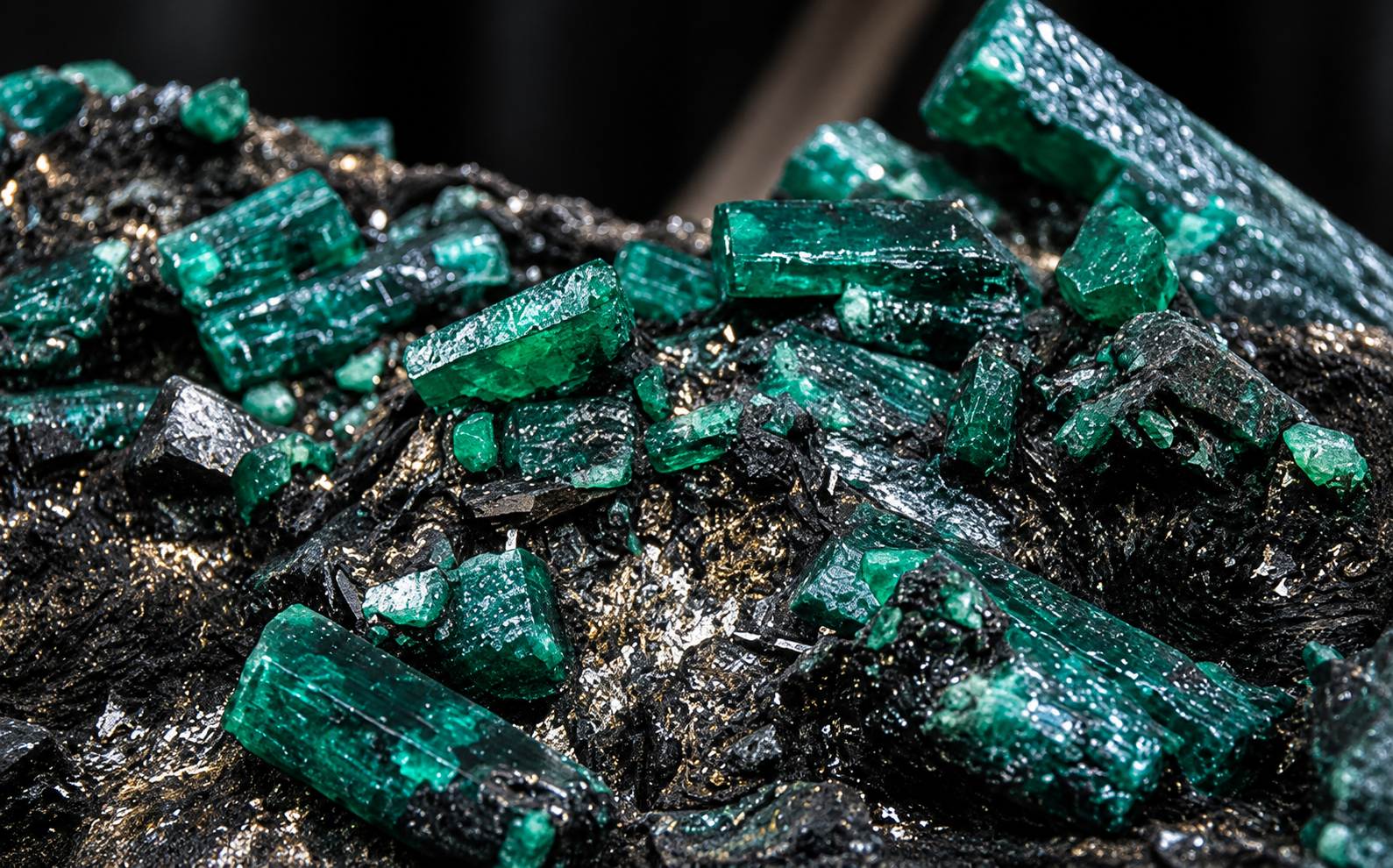
Rough emerald crystal from a Zambian mine: The Natural Emerald Company
Market Snapshot
This week's market signals arrive from opposite ends of the Chinese jewelry spectrum, and they do not point in the same direction. Reading them together is more important than reading either one alone. Richemont's Jewellery Maisons growing 24% in China, and the NBS reporting that gold, silver, and jewelry fell 3.4% in June. Both are accurate. They describe the same country in the same month. The reason they can both be true simultaneously is the most important analytical insight this week delivers.
On July 15, Richemont reported Q1 FY2027 group sales of €6.33 billion, up 20% at constant exchange rates against analyst expectations of €5.90 billion. Its Jewellery Maisons, Cartier, Van Cleef & Arpels, Buccellati, and Vhernier, grew 24%, nearly double the 13.5% forecast. Asia Pacific sales rose 21%, with Richemont explicitly confirming double-digit growth in China, Hong Kong, and Macau combined for its jewelry divisions. The same day, Chow Tai Fook reported FY2026 full-year revenue up 5.3% to HK$94.4 billion, operating profit surging 27.8% to a five-year margin high of 20%, driven by its brand transformation toward high-jewelry and gem-set collections. What connects these two results is not that Chinese consumers are spending freely. It is that a specific type of spending has proven resilient: purchases where the buyer is paying for scarcity, trust, and design rather than for the material weight of the object. Cartier and Van Cleef do not compete with loose commercial-grade stones. They compete with gold bars and luxury watches, and they are winning that competition because jewelry in a branded context carries a narrative that gold cannot replicate, and that a loose stone without provenance or design context also cannot replicate. The 24% growth at Richemont is not evidence that China's gemstone market is broadly recovering. It is evidence that the trust premium is commanding a price, and that price is unavailable to supply that cannot prove its quality and origin.
The macro data explains why that dynamic is intensifying rather than moderating. China's National Bureau of Statistics reported that goods retail grew only 1.1% across the first half of 2026 and rebounded just 1.0% year-on-year in June, reversing May's 0.6% contraction, which Caixin described as the weakest reading in more than three years. Services consumption grew 5.3% across the same period. That 4.2 percentage point gap between services and goods spending is not a cyclical anomaly. It reflects a Chinese consumer who, facing income uncertainty and deflationary price expectations in physical goods, is redirecting discretionary spending toward experiences, travel, dining, and entertainment, rather than objects. When physical goods do attract spending, consumers are gravitating toward objects that function as stores of value: gold, above all, which still represented the dominant share of China's jewelry retail. Within that already cautious goods environment, gold, silver, and jewelry specifically fell 3.4% in June. The consumer who is buying jewelry in this environment is buying it for reasons that justify the purchase despite broader caution: brand recognition, design, occasion, or verifiable rarity. The consumer who would buy a loose aquamarine or a commercial-grade emerald parcel on the basis of price and availability alone is not buying anything this month.
On the supply side, Gemfields added a signal this week that goes beyond the pricing numbers. Its inaugural Trade Select ruby auction, held June 22 to 29, generated $23.1 million at $66.30 per carat across 82 of 89 lots, with sapphire categories introduced for the first time. The $66.30 average is not a fine ruby price; the format deliberately offered a broader quality mix than the February 2026 mixed-quality auction at $279 per carat, and the two figures are not comparable. What matters is the format decision itself. Gemfields' introduction of sapphire into a ruby auction and broadening the quality range signals that it is managing revenue under structural production pressure: ore grades at Montepuez halved between 2025 and the first five months of 2026. When the world's largest ruby producer cannot sustain its existing auction architecture on premium material alone and begins introducing new categories to support revenue, it is telling the market something about the direction of future supply. The leadership transition attached to that announcement compounds the uncertainty. Sean Gilbertson stepped down effective July 15, with CFO David Lovett assuming the interim CEO role while retaining his finance responsibilities. That means the executive responsible for financial discipline is now also responsible for commercial strategy, auction positioning, and supplier relationships, simultaneously, during a period of grade decline and format restructuring. The October auction, the next major ruby price signal, will reflect decisions made by an interim leadership team navigating all of those pressures at once. For buyers and miners reading that auction as a reference price, the composition of the October lot, how much fine material Gemfields can produce between now and then, and whether it holds premium lots back or sells into the market under financial pressure, will matter as much as the average per carat achieved.
Taken together, this week's data describes a market that has finished separating and is now deepening the separation. Premium-branded jewelry is growing in China at double-digit rates because it meets the conditions a cautious, selectivity-driven consumer requires: recognizable trust, designed scarcity, and a clear reason to spend. Mass goods consumption, including the channel where commercial-grade colored stones compete, grew at 1.1% in the first half and saw jewelry decline in June. The economic mechanism producing that split is not a temporary sentiment. It is a structural shift in how Chinese consumers evaluate discretionary purchases, now confirmed across two luxury bellwether companies and official national consumption data in the same week. The channel where colored gemstone growth still exists is not broad. It runs specifically through premium, documented, design-ready supply. Everything outside that channel is competing in a market where the consumer who would have bought it is currently either buying gold or buying nothing at all.
Miner’s Insight
The message this week is not that China has stopped buying gemstones. It is that China is buying through narrower doors, and understanding which doors those are is the difference between a sale and a shipment that sits.
Richemont's Jewellery Maisons grew 24% in China this quarter. Chow Tai Fook posted a five-year margin high. Those are real numbers, and they reflect real demand. But the demand they describe does not begin with a miner sending a parcel to Shenzhen and waiting for a buyer to show up. It begins with a retailer who has already decided what product it is building, working backward to find supply that fits a specific design, a specific collection, or a specific customer. That demand flows through trust, brand context, and a known downstream use. A stone without a committed buyer and a defined channel does not enter that market. It enters the commercial goods market, where the NBS reported jewelry fell 3.4% in June, where buyers are slower, more cautious, and anchoring harder on price.
This changes the question a miner should be asking before export. The question is no longer only whether a stone is good. It is whether the stone can reach a channel where its quality will actually be paid for. Premium color, clean formation, consistent parcel quality, and strong documentation are not administrative requirements. They are the conditions a premium buyer requires before they will pay above the commercial floor. Without them, a stone competes on price alone in a market where the buyer holds the advantage and the NBS data already told us this week what direction prices are moving.
The Gemfields Trade Select auction this week shows exactly how fast repricing happens when parcel composition changes. A broader quality mix produced an average of $66.30 per carat, against $279 per carat at February's mixed-quality auction. Ruby demand did not collapse between February and June. What changed was the composition of what Gemfields offered. Average price follows parcel composition, not category narrative. A parcel with a few strong pieces and many ordinary stones will not be priced as premium inventory. It will be priced as mixed supply with selective upside, at a blended figure that undervalues the best material and overpays for the weakest.
There is one additional signal in the Gemfields data specific to miners holding ruby or ruby-adjacent material. The October auction will be the next institutional ruby price reference, and it will arrive under interim leadership, in a format that has already changed once this year, from a mine now producing at half its previous ore grade. That combination means the October average, whatever it is, will be harder to read as a reliable market signal than a standard Gemfields mixed-quality result under stable conditions. Miners whose negotiations between now and October depend on a clear institutional reference price are working without one.
China is not a closed market. It is a market that has finished sorting itself into buyers who are still spending and buyers who are not. The growth that exists is available to stones prepared for a specific buyer in a specific channel with a clear reason for the purchase. Everything outside that description is waiting in a market where this week's data already told us what the outcome looks like.
Export & Compliance
No new regulatory change affecting Zambian gemstone exports has been identified this week. The latest available official position shows the 15% export duty on precious stones and metals suspended, but exporters should still verify the current duty, royalty, and permit position directly with MRC or ZRA before shipment. Correct documentation, mineral analysis, royalty clearance, production records, and security clearance remain essential before goods leave the country.
The operational change this week is on the logistics side. Renewed US-Iran escalation has reduced traffic through the Strait of Hormuz, with daily transits falling to three by Thursday, the lowest level since May, while Brent crude moved from $75.50 the previous week to $82.
For gemstone exporters, the direct risk is not that stones move by sea through Hormuz. The risk is that conflict around Gulf logistics affects fuel costs, insurance, air routing, carrier reliability, and delivery timing through Middle Eastern transit hubs used by East Africa to China shipments. Freight and insurance assumptions made before July 11 should be requoted before goods leave the origin. Under these conditions, a confirmed buyer, updated logistics quote, and clear delivery timeline are the baseline for managing export risk this week.
Opportunity of The Week
The strongest opportunity this week is collection-ready supply for confirmed design-led buyers. Last week’s opportunity was inventory discipline: do not move weak commercial material into an oversupplied market. This week’s opportunity is the next step. Once a miner has identified better material, the question is not simply whether the stone is attractive. It is whether the stone can be presented as part of a product a buyer can actually build, price, and sell.
This matters because the demand still active in China is not loose, open-ended demand. It is demand attached to a reason for purchase: a high-jewelry collection, a matched pair, a center stone, a private client order, or a retailer trying to move customers away from plain gold into design-led jewelry. A stone that arrives only as inventory enters a price negotiation. A stone that arrives with a clear design role enters a value conversation. Quality with a destination commands a different conversation than quality alone.
For Zambian emerald, the opportunity is color-consistent material that can be presented for high-jewelry or gem-set use, not loose volume. The strongest parcels are those where a buyer can immediately understand the design possibility: matched color, usable sizes, clean visual presentation, and enough documentation to support a premium retail story. The commercial value is not only in the stone’s geological quality. It is in reducing the work a buyer must do before seeing how that stone becomes jewelry.
For ruby, the opportunity is time-sensitive but should not be confused with a broad bullish signal. The next institutional ruby reference will come from Gemfields’ October auction, and that reference may be harder to interpret because the auction format and leadership structure have already changed this year. Miners holding vivid, well-sorted ruby material should not wait passively for October to define the market. The better move is to pre-qualify material now with confirmed buyers, documented quality, and a collection-ready presentation, so negotiation begins from suitability rather than from a future average price.
Practical Tip
Before offering any material this week, ask the buyer one question before discussing price: what product is this material for? A buyer sourcing a center stone, a matched pair, calibrated accent stones, or commercial volume is not evaluating the parcel in the same way. Each use requires a different size range, color consistency, clarity threshold, treatment tolerance, and documentation level. Confirming the intended use before presenting stones is the fastest way to avoid selling the right material into the wrong conversation.
A miner who sends a mixed offer and waits for the buyer to define the use hands the buyer control over the value frame. A miner who confirms the product channel first can select only the stones that fit, remove weaker material from the offer, and negotiate against suitability rather than availability. The practical difference between those two conversations is the difference between a buyer pricing the whole parcel at its weakest stones and a buyer pricing specific material at what it is actually worth to their production.
For Monday morning, send a short message to any active buyer before sharing parcel details: “What are you currently sourcing for, and what size, color, treatment status, documentation, and delivery timing do you need?” Only after that answer should you choose which stones to present. If the material in hand does not match the answer, the stones are not ready for that buyer yet. Presenting them anyway weakens the seller’s position by turning potentially useful stones into excess inventory. In this market, the first step is not preparing more inventory. It is finding out which part of the market the buyer is actually serving, and whether what you hold belongs there.